
Families can support their child’s reading development in many ways throughout the day. Simple activities, conversations, and shared experiences offer opportunities to strengthen important literacy skills without needing special materials or structured lessons. From playing with sounds in words to discussing books and practicing language during everyday routines, families can help children build skills that support reading success.
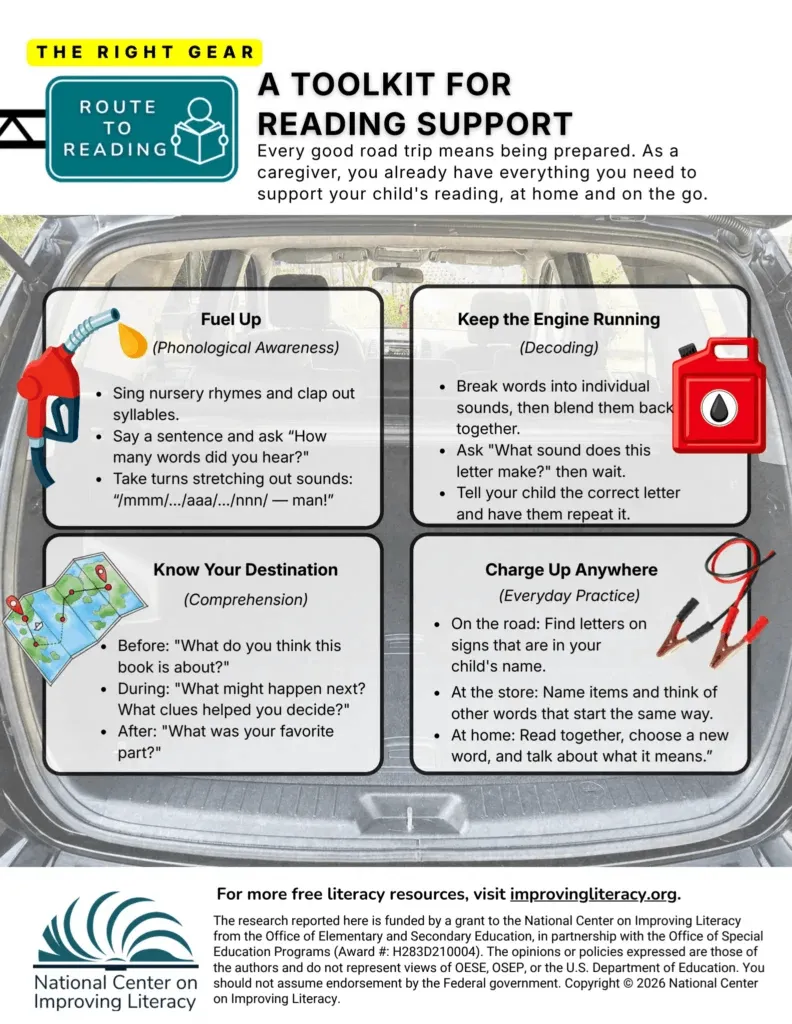
One important area of early literacy development is phonological awareness, or the ability to hear and work with sounds in spoken words. Children can practice this skill by listening to rhymes, counting the words they hear in a sentence, or breaking words into smaller parts. For example, singing nursery rhymes helps children recognize patterns in spoken language, while clapping out syllables helps them understand how words can be divided into sounds and sound parts.
Another important skill is decoding, which involves using letter-sound relationships to read words. Families can support this skill by encouraging children to identify individual sounds and blend them together to form words. As children become more familiar with how letters represent sounds, they can begin applying these connections when reading unfamiliar words.
Reading comprehension is also an important part of literacy development. Understanding what is read involves more than recognizing words on a page. Families can support comprehension by talking with children before, during, and after reading. Looking at a book’s cover, discussing what might happen next, and asking children to share their thoughts about a story can help them think about and understand what they read.
Opportunities to practice literacy skills also extend beyond reading activities. Preparing meals together can introduce new vocabulary and help children understand the order of steps in a task. Making lists provides opportunities to connect spoken words with written language. Playing games, talking about familiar objects, and discussing new words can also support language development.
Everyday routines can become opportunities to reinforce the skills children are learning at school. By incorporating sounds, letters, words, and conversations into familiar activities, families can support reading development in ways that fit naturally into daily life.
Explore the Route to Reading Series
Explore all 10 infographics in the Route to Reading series, along with the complete family guide.
Explore the Complete Series