
Supporting literacy development doesn’t have to happen only during reading time at home. Everyday outings, errands, and conversations provide opportunities for children to practice important reading and language skills. Whether families are visiting the grocery store, traveling in the car, or spending time at the library, familiar activities can help reinforce the skills children are developing.
One way to encourage literacy development is by helping children recognize sounds in spoken words. At the grocery store, for example, families can say the names of items in syllables and ask children to identify the words. Activities like these help children develop phonological awareness, which involves hearing and working with the sounds in spoken language.
Traveling also provides opportunities to practice letter recognition and letter-sound connections. During a car ride or walk, families can point out letters on street signs, storefronts, and other familiar places. Children can look for letters in their names and practice identifying the sounds those letters represent. These simple interactions help connect the letters children are learning with the written language they encounter in everyday life.
Conversations during daily activities can also support vocabulary and language development. When visiting family members, children can practice sharing information, asking questions, and listening to others. At the library, families can encourage children to talk with librarians about their interests or ask for help finding books on a particular topic. These interactions provide opportunities to use language for different purposes and build communication skills.
Families can also encourage children to notice and talk about unfamiliar words throughout the day. Discussing what words mean and how they are used helps children expand their vocabulary and make connections between language and their experiences.
Everyday literacy practice does not require special materials or a planned lesson. By paying attention to the sounds, letters, words, and conversations that are already part of daily routines, families can create meaningful opportunities to support their child’s literacy development. These experiences help children build language and communication skills that contribute to learning to read.
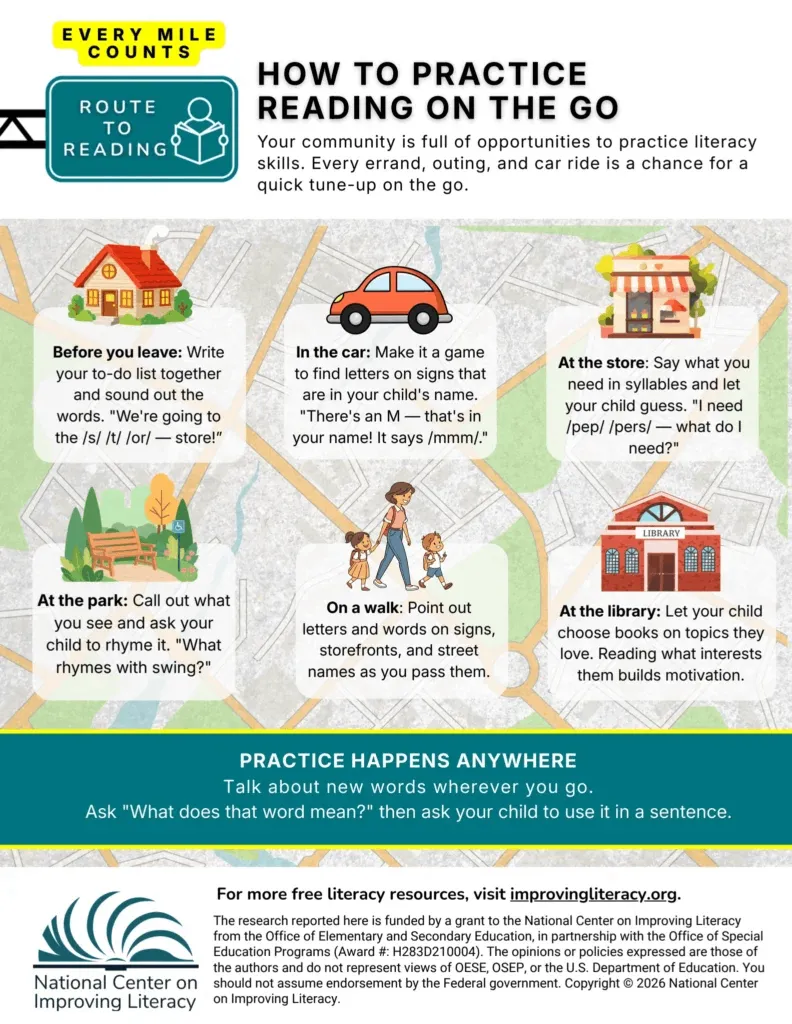
Explore the Route to Reading Series
Explore all 10 infographics in the Route to Reading series, along with the complete family guide.
Explore the Complete Series