
Understanding where your child is in their reading development is an important first step in determining what support they may need. Just as drivers check their mirrors to understand what is happening around them before moving forward, reviewing your child’s reading progress helps establish a starting point for setting meaningful literacy goals.
Reading assessments provide information about the skills children have developed and areas where they may need additional instruction or intervention. Families can begin by asking their child’s teacher to review assessment results and explain what they show. Looking at progress over time can help identify skills a child has mastered, gaps that may exist, and areas that need attention. This information provides a baseline for determining what comes next.
Once families understand their child’s current reading skills, the next step is to work with teachers to establish clear literacy goals. These goals should be SMART: Specific, Measurable, Attainable, Relevant, and Time-based. Setting goals in this way helps families and educators focus on particular skills, understand what progress should look like, and determine whether a child is moving in the right direction.
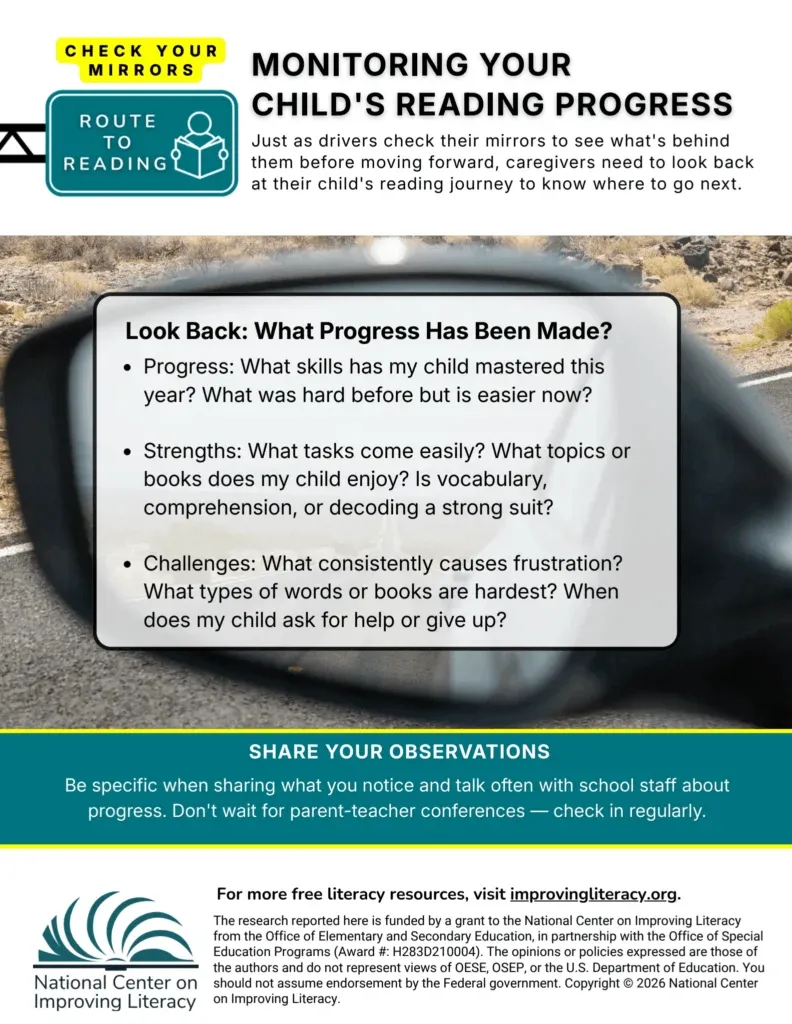
Monitoring progress should be an ongoing process rather than something that happens only during scheduled parent-teacher conferences. Regular communication with teachers and school staff allows families to stay informed about their child’s development and ask questions when concerns arise. If a child is not making expected progress, families can discuss whether instructional approaches need to be adjusted or whether additional support may be necessary.
Children who have reading disabilities or are at risk for reading difficulties may need targeted, evidence-based interventions to address their specific needs. Reviewing progress regularly helps families and educators understand whether the support being provided is helping the child move toward their reading goals.
Families also bring an important perspective to these conversations. Observations about reading at home, including skills that seem easier or more difficult, can provide teachers with additional information about a child’s progress. By sharing these observations, reviewing assessment results, and maintaining regular communication, families and educators can work together to support continued reading development.
Explore the Route to Reading Series
Explore all 10 infographics in the Route to Reading series, along with the complete family guide.
Explore the Complete Series