

Learning to read is a complex process, and children may develop reading skills at different rates. However, when a child experiences ongoing difficulties with reading, recognizing those challenges and addressing them early is important. Families play a valuable role in noticing changes in their child’s reading development and communicating concerns with teachers before small difficulties become larger problems.
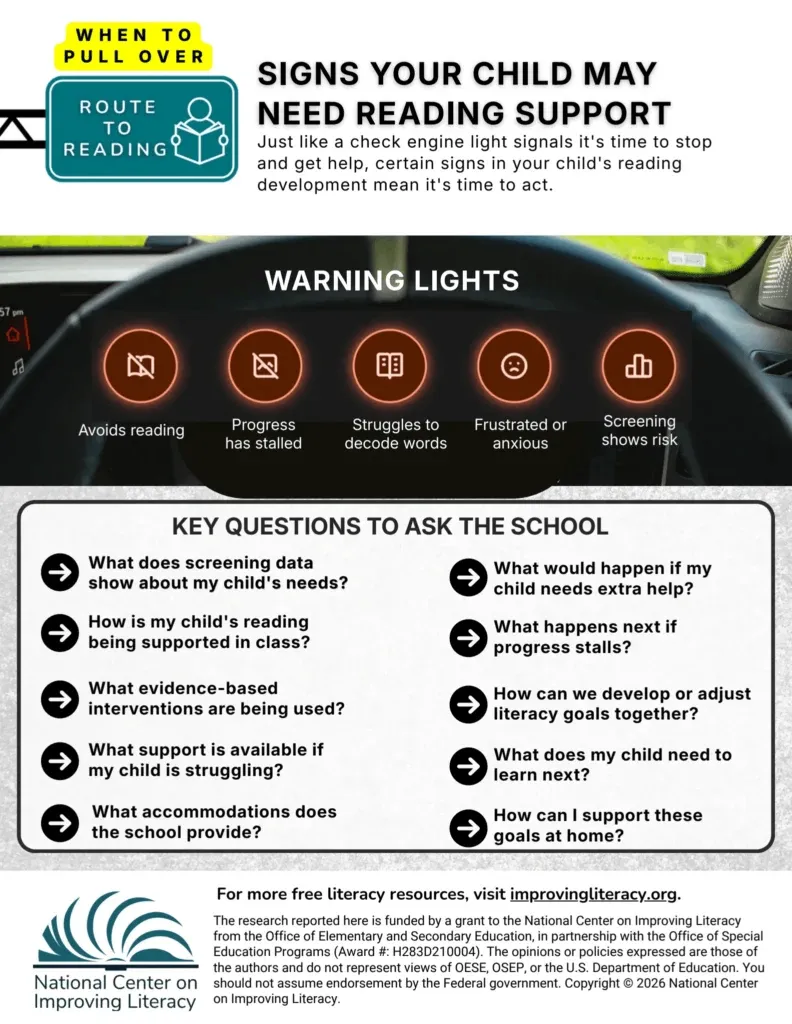
Reading difficulties can appear in different ways. Some children may struggle to decode unfamiliar words or use letter-sound relationships when reading. Others may show signs of frustration or anxiety during reading activities, avoid reading altogether, or stop making expected progress. Screening assessments may also indicate that a child is at risk for reading difficulties. Paying attention to these signs can help families recognize when it may be time to ask about additional support.
When concerns arise, families should communicate with their child’s teacher to better understand what is happening at school. Asking about screening results and current reading performance can help identify which skills may need attention. Families can also ask how reading is being taught in the classroom and what support is available when students experience difficulties.
Understanding the type of instruction and intervention a child receives is another important part of these conversations. Families can ask whether evidence-based literacy instruction and interventions are being used to address their child’s needs. If a child continues to struggle or progress stalls, it is important to discuss what steps the school will take next and whether changes to the instructional approach or additional support may be needed.
Regular communication with teachers can also help families understand their child’s literacy goals and how progress is being monitored. Sharing observations about reading at home, asking what skills their child needs to develop next, and discussing ways to support learning outside the classroom can strengthen the partnership between families and educators.
Every child’s reading journey is unique, but families do not have to navigate reading difficulties alone. By staying connected with the school, monitoring reading progress, and using simple routines at home, families can play an active role in helping their child receive the support they need to continue developing reading skills.
Explore the Route to Reading Series
Explore all 10 infographics in the Route to Reading series, along with the complete family guide.
Explore the Complete Series