
MTSS-R Implementation Guide
Intro
A step-by-step guide to implementing multi-tiered systems of support in reading (MTSS-R).
Multi-tiered systems of support in reading (MTSS-R) are comprehensive and integrated systems of instruction and intervention designed to ensure that all students meet essential literacy academic and behavior goals and objectives.
The purpose of this guide is to lead schools through the process of implementing MTSS-R focused on five major MTSS-R elements. The MTSS-R implementation process occurs across multiple years and is fueled by a continuous improvement cycle.
The key goal of this guide is to support schools in MTSS-R by developing and implementing a dynamic school MTSS-R action plan to increase staff’s knowledge of and capacity to use evidence-based instructional strategies and support school-wide implementation of MTSS-R.
School teams can use this guide to jointly learn the elements of MTSS-R and systematically develop an action plan together to implement MTSS-R. Each step contains learning objectives along with materials to help you achieve them.
New to MTSS-R? We recommend carefully following each step and completing all objectives in the guide to learn how MTSS-R can help you build or improve your current system of support for reading. Remember, strong implementation of an effective MTSS-R approach is a process that takes time.
Not new to MTSS-R? We recommend you complete the objectives and activities that are most helpful to you. As you refine your MTSS-R, improvements in student reading outcomes should follow.
Step 1: Establish Leadership Team
Approximate Time to Complete: 1 Hour
In this step, you will establish or refine a MTSS-R Leadership Team to oversee planning and implementing MTSS–R in your school.
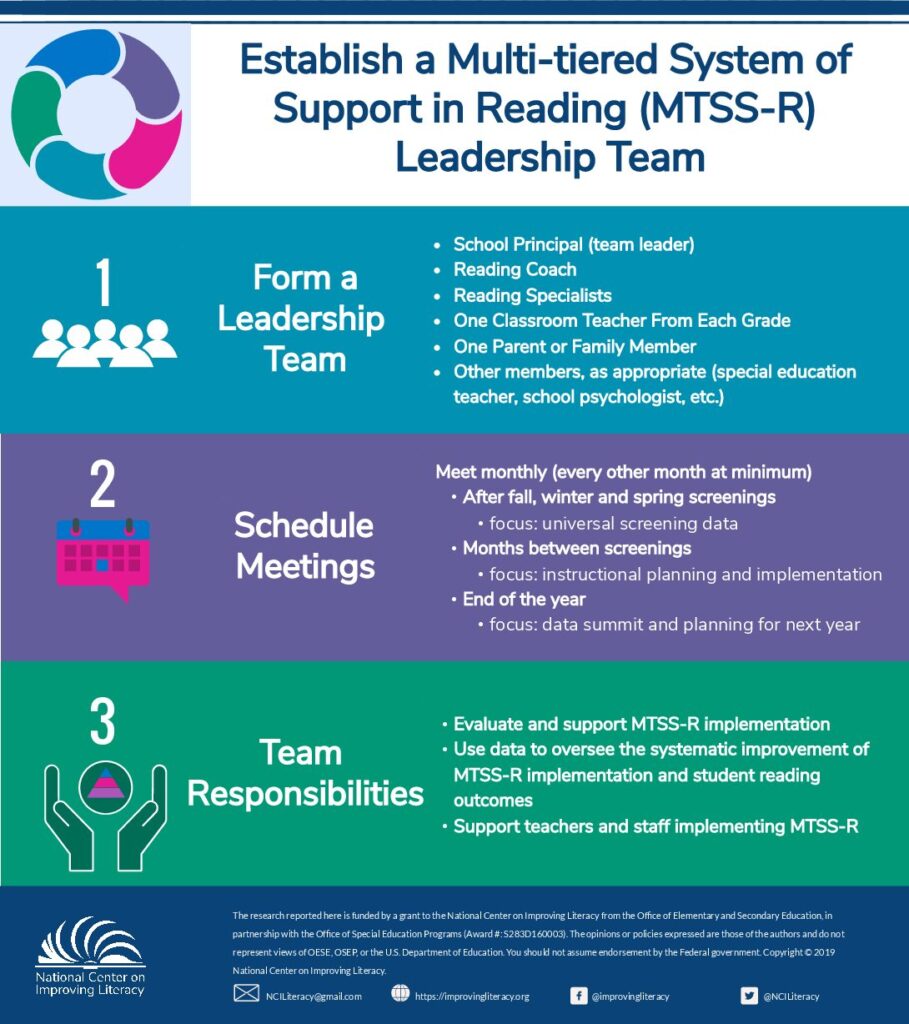
1. Form a MTSS-R Leadership Team
It is important to establish a MTSS-R leadership team that represents multiple positions and encourages various perspectives in decision making. The team configuration may need to adjust over time based on future circumstances, needs, or priorities. Your MTSS-R Leadership Team should include:
- School Principal (team leader): responsible for setting up the team, facilitating meetings, and making sure the leadership team process runs smoothly
- Reading Coach
- Reading Specialists
- One Classroom Teacher from Each Grade
- One Parent or Family Member
- Other members, as appropriate (e.g., special education teacher, school psychologist)
2. Schedule Monthly MTSS-R Leadership Team Meetings for the School Year
- Teams should meet each month for at least one hour.
- Meetings should focus on developing, refining, and implementing the school action plan and using data to adjust implementation, as needed.
3. Review Team Responsibilities
- Evaluate and support school-wide implementation of MTSS-R.
- Use data to oversee the systematic improvement of MTSS-R implementation and monitor student reading outcomes.
- Discuss and forecast issues or barriers related to MTSS-R implementation and strategize solutions.
Step 2: Build Knowledge
Approximate Time to Complete: 1 Hour
In this step, you will build background knowledge about MTSS-R and the Continuous Improvement Cycle.
What is MTSS and MTSS-R?
Multi-tiered systems of support in reading (MTSS-R) are comprehensive and integrated systems of reading instruction and intervention designed to ensure that all students meet essential reading goals and objectives.
MTSS-R is:
- Comprehensive, in that all students are supported to meet these reading objectives.
- Integrated, in that the multiple tiers of reading instruction and intervention are aligned to make sure students do not fall through the cracks.
- Differentiated, in that reading instruction and intervention services are adjusted for students based on their individual reading needs and are provided through both group and individual approaches.
The Five Key Elements of MTSS-R
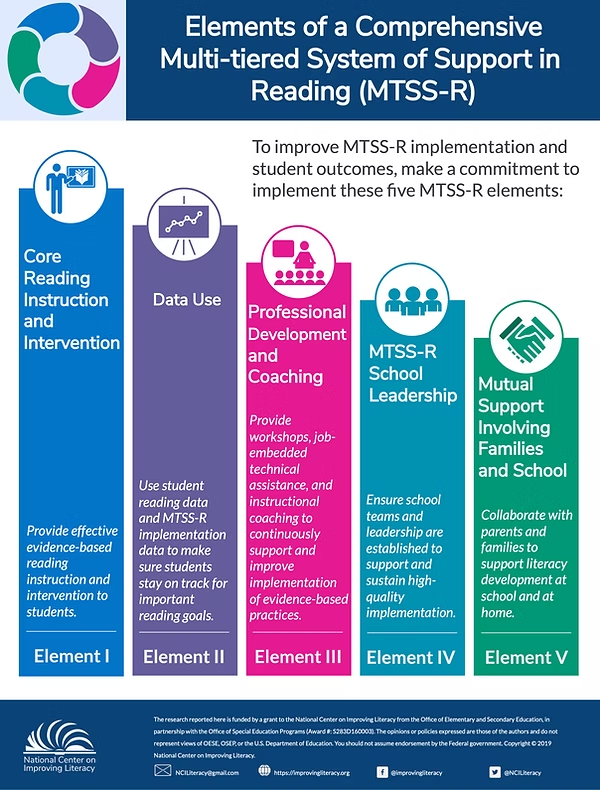
To improve MTSS-R implementation and student outcomes, make a commitment to implement these five MTSS-R elements:
- Core Reading Instruction and Intervention: Provide effective evidence-based reading instruction and intervention to students.
- Data Use: Use student reading data and MTSS-R implementation data to make sure students stay on track for important reading goals.
- Professional Development and Coaching: Provide workshops, job-embedded technical assistance, and instructional coaching to continuously support and improve implementation of evidence-based practices.
- MTSS-R School Leadership: Ensure school teams and leadership are established to support and sustain high-quality implementation.
- Mutual Support Involving Families and School: Collaborate with parents and families to support literacy development at school and at home.
Continuous Improvement Cycle
Strong implementation of an effective MTSS-R approach takes time. It requires using a cycle of continuous improvement to make regular adjustments based on data to improve implementation. The continuous improvement cycle begins with a comprehensive self-evaluation of your school’s current reading approach. This self-evaluation—or reading system audit—will help you determine your major priorities for action planning to build and solidify your MTSS–R. As you improve your MTSS-R, improvements in student reading outcomes should follow.
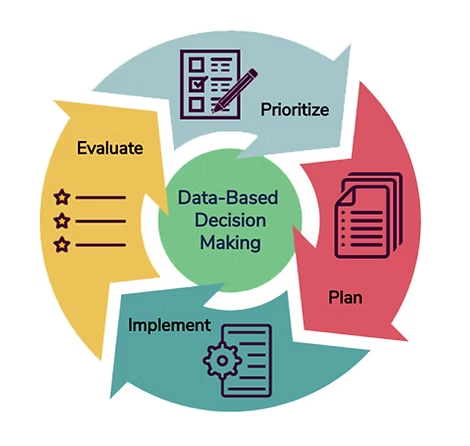
There are four steps to a continuous improvement cycle:
- Evaluate: Teams systematically collect, review, and analyze data on MTSS-R implementation and student reading achievement. They identify patterns in the data and determine next steps for improving MTSS-R implementation.
- Prioritize: Teams use data results to identify 1-2 important focus areas for supporting reading instruction and intervention.
- Plan: Teams create an action plan that specifies their prioritized focus area and key implementation actions to support instruction and intervention.
- Implement: Teams carry out their action plan and collect MTSS-R implementation and student reading performance data to determine the impact of their implementation activities. Over time, teams assess if their implementation activities have improved student reading outcomes, or whether additional actions or adjustments to their implementation plan are needed.
Review
Watch the video below with your team and then discuss what you learned:
- Identify the basic elements of Multi-Tiered Systems of Support in Reading (MTSS-R)
- Understand how MTSS-R can improve student reading outcomes
- Understand the key steps needed to set up and use MTSS-R effectively
Materials to Download:
Step 3: Evaluate
Approximate Time to Complete: 4-6 Hours
In this step, you’ll start the continuous improvement cycle by evaluating your school’s current MTSS-R using the MTSS-R Implementation Checklist and identify key actions to further implementation.
As a team, watch the training videos below to build background knowledge about the five elements and learn how to score the checklist. Then, complete and score all sections of the MTSS-R Implementation Checklist. Consider doing this step across multiple meetings.
Materials
MTSS-R Implementation ChecklistThe MTSS-R Implementation Checklist is a tool that schools use on an ongoing basis (e.g., each year) to continuously evaluate and improve MTSS-R. The Implementation Checklist provides a comprehensive list of actions that schools implement within each of the five major elements.
Videos on the five major MTSS-R elements and instructions on how to score the MTSS-R Implementation Checklist.
Step 4: Prioritize
Approximate Time to Complete: 1 Hour
Once you have completed the MTSS-R Implementation Checklist, you are ready for the prioritization step of a continuous improvement cycle. In this step, examine your MTSS-R Implementation Checklist results, your student reading performance data, and MTSS–R implementation data to identify and prioritize key implementation actions.
- Identify which tier of instruction (Core, Supplemental, or Intensive) is your highest priority (according to student reading performance data), and record it.
- Decide which implementation phase (Readiness, Initial Implementation, Advanced Implementation) is most representative of Element 1: Core Instruction and Intervention in your school’s current MTSS-R. Refer to your MTSS-R Implementation Checklist ratings and the MTSS-R Phases of Implementation Worksheet to gauge the health of your system and determine the overall level of priority for action planning.
Materials
Use the Prioritization PowerPoint to overview the prioritization process and complete the team objectives.
The Training Notes provide additional information to support you as you review the PowerPoint slides.
Use this worksheet to identify your school’s current implementation phase for each of the five MTSS-R elements.
Complete the MTSS-R Implementation Checklist (Google sheet).
Note that you must be logged into a Google account in order make a copy of the Google Sheet. For more information, see our Template Usage instructions.
School Data (if available)
- Your student reading performance data
- Your school implementation data
Step 5: Plan
Approximate Time to Complete: 1 Hour
Once you have identified your prioritized tier of instruction (Core, Supplemental, or Intensive) and prioritized implementation phase (Readiness, Initial Implementation, Advanced Implementation) for Element I: Core Instruction and Intervention, you are ready for the planning step of a continuous improvement cycle. In this step, complete your school’s MTSS-R action plan, including identifying an Instruction and Intervention goal and key implementation actions for each of the five MTSS-R Elements.
An MTSS-R action plan is a dynamic document that you use to identify an instruction and intervention goal for the school year and key MTSS-R actions to achieve this instruction and intervention goal. Creating an MTSS-R action plan increases transparency about the goals and actions you undertake as a school. This makes it easier to share the plan with staff and promote its sustained use even when turnover within your MTSS-R Leadership Team arises. You should refer to your MTSS-R action plan during monthly MTSS-R Leadership Team meetings to identify action steps that align with your instruction and intervention goal.
Record the following information in the Action Plan:
- Your overall reading instruction and intervention goal
- The data that will be collected and used to evaluate your goal
- The items, or actions, that will support reading instruction and intervention
Materials
Use to identify an instruction and intervention goal for the school year and key MTSS-R actions to achieve this instruction and intervention goal.
Use the Planning PowerPoint to overview the action planning process and complete the team objectives.
The Planning Training Notes provide additional information to support you as you review the PowerPoint slides.
Use to identify key activities and resources to establish leadership team knowledge and infrastructure in the MTSS-R elements.
Complete the MTSS-R Implementation Checklist from Step 3
Complete the MTSS-R Phases of Implementation worksheet from Step 4
Step 6: Implement
The final stage in implementing a successful MTSS-R is putting your plan in action! In this step, complete the Implementation Activities related to the five MTSS-R elements you identified in your Action Plan throughout the school year. Collect data to determine the effectiveness of your plan for achieving your Instruction and Intervention goal.
- Meet monthly to determine items to complete between meetings to achieve your established Instruction and Intervention goal by the end of the school year.
- Choose 1-2 items from your Action Plan to tackle each month. As you complete activities, identify or add new activities from the MTSS-R Key Implementation Phase Activities in Step 5
Tips for Successful Implementation
- Share your Action Plan with staff and clarify each staff member’s role and responsibilities in implementing the plan. Ask staff for feedback and adjust as needed.
- Use student performance and school implementation data to evaluate progress toward your instruction and intervention goal and adjust your Action Plan as needed.
- At the end of the school year, use student performance and school implementation data to evaluate whether you have accomplished your instruction and intervention goal. Self-reflect on the progress your school made toward strong MTSS-R implementation and use a cycle of continuous improvements to make regular adjustments based on data.
- Adjust your action plan based on your self-reflection:
- If you accomplished your Instruction and Intervention goal, identify a new Instruction and Intervention goal.
- If you have yet to accomplish your Instruction and Intervention goal, reflect on what is and isn’t working about your plan. Look back to the key activities and your MTSS-R Implementation Checklist. Is implementation occurring as intended? Do specific actions need to be revised or adjusted? Identify next steps and update your action plan accordingly.