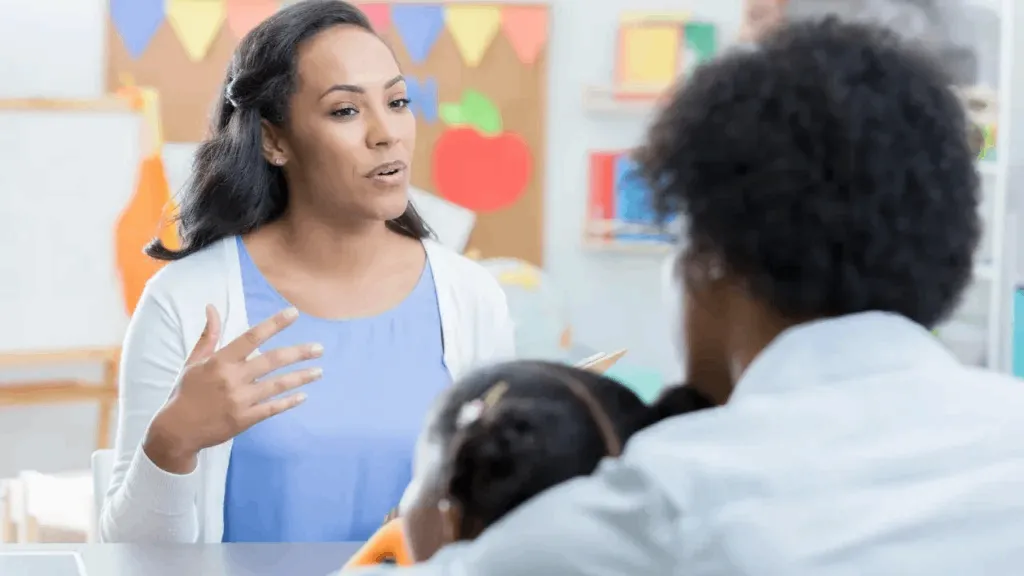
Supporting a child’s reading development involves ongoing communication between families and educators. Teachers and school specialists provide instruction and monitor students’ progress, while families offer valuable insights into how their children approach reading outside the classroom. When both share information and work together, they can better understand a child’s needs and identify ways to support continued literacy development.
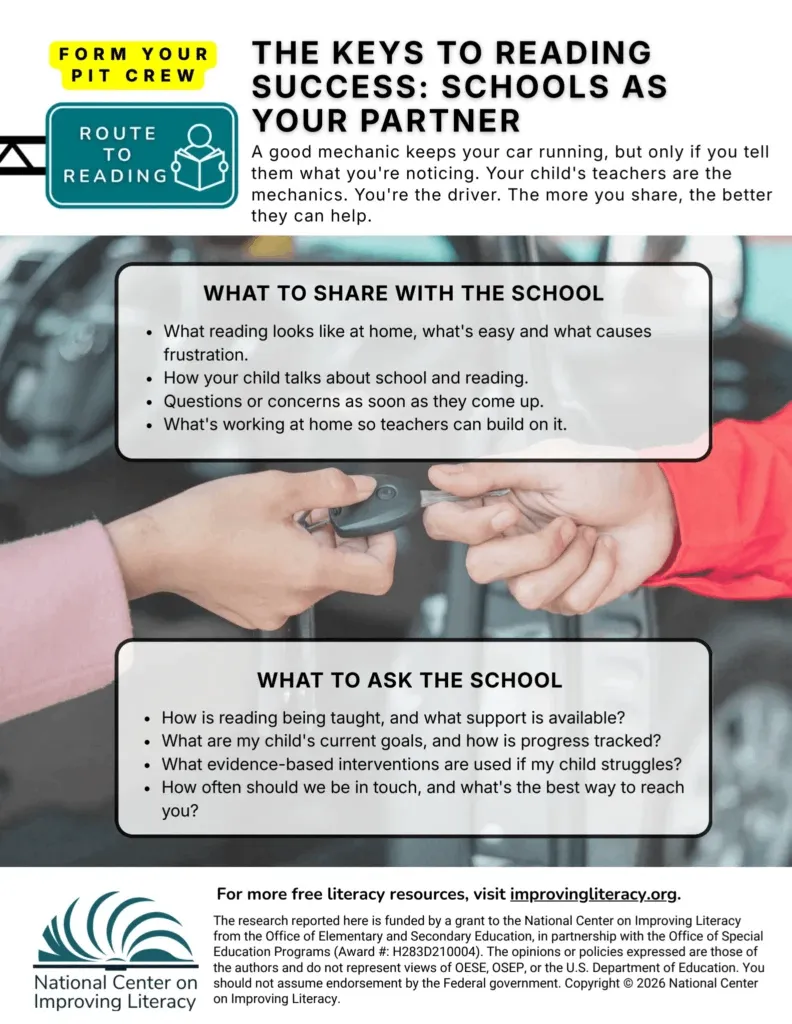
Families have a unique perspective on their child’s learning. At home, they may notice which reading activities come easily, which skills cause frustration, and how their child responds when faced with challenges. Children may also share thoughts or concerns about reading and school that teachers do not always hear in the classroom. Communicating these observations helps educators develop a more complete understanding of a child’s reading experiences.
Regular communication is an important part of building a strong partnership. Parent-teacher conferences, brief emails, progress updates, and phone calls provide opportunities to exchange information and address concerns. Families do not need to wait until a scheduled meeting or until their child experiences significant difficulties to reach out. Staying connected can help identify small concerns before they become larger problems.
Along with sharing observations, families can ask questions to better understand how reading is being taught and what support is available. Learning about a child’s current literacy goals and how progress is measured can help families understand which skills their child is developing and whether additional support may be needed. Families can also ask about evidence-based reading interventions, accommodations, and ways to reinforce literacy goals at home.
Knowing who to contact at school is another important part of maintaining communication. Identifying a primary contact for literacy questions and establishing a preferred way to communicate can make it easier to share updates, discuss concerns, and follow up on a child’s progress.
A strong school and family partnership depends on information moving in both directions. Educators can share what they are seeing in the classroom, while families contribute observations and experiences from home. By maintaining open communication, asking informed questions, and sharing what works, families and schools can work together to support a child’s reading development.
Explore the Route to Reading Series
Explore all 10 infographics in the Route to Reading series, along with the complete family guide.
Explore the Complete Series