
Learning to read is a complex process that involves the development of both spoken and written language skills. Much like the different parts of a car work together to keep it moving, these skills work together to support a child’s progress in reading and writing. Understanding how they connect can help families recognize the different skills involved in learning to read.
Oral language provides the foundation for literacy development. Through speaking and listening, children learn to understand and use sounds, words, and ideas. Activities such as recognizing rhymes, breaking words into syllables, and using new vocabulary in conversation help strengthen spoken language skills that directly support reading.
Written language builds on this foundation. As children learn to recognize letters, connect them to sounds, blend sounds to read words, and express ideas through writing, they develop the skills needed to understand and use written language. Spoken and written language are closely connected, and both play an important role in helping children become successful readers.
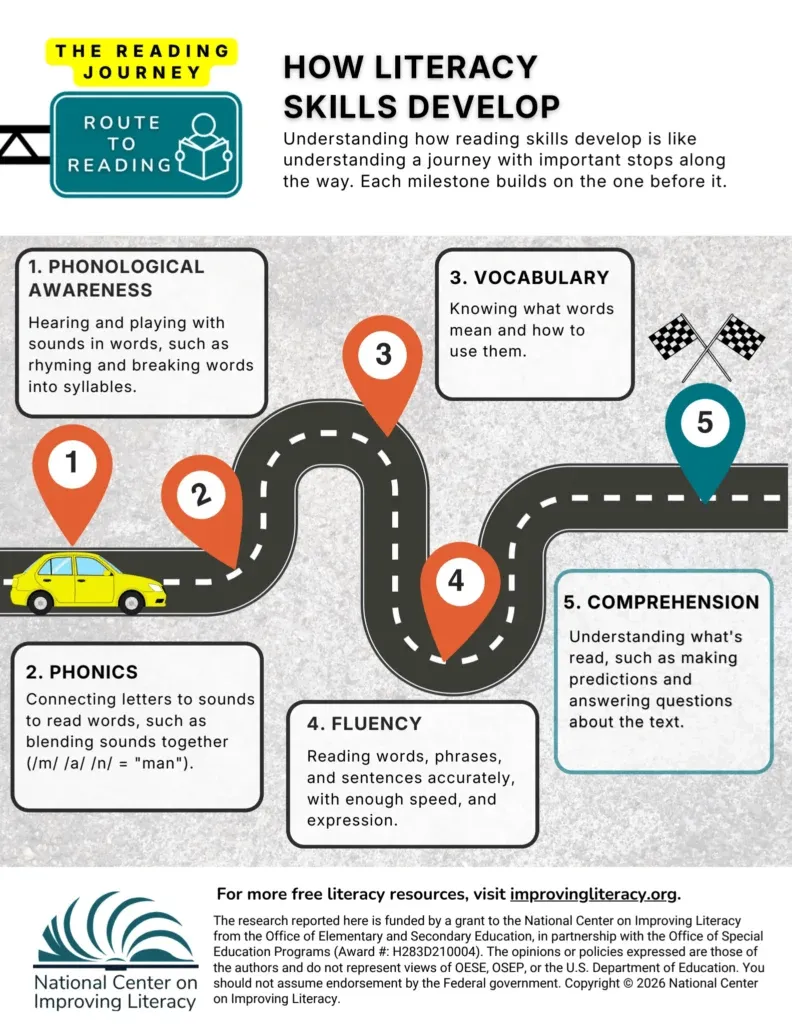
Research shows that effective reading instruction includes five essential components: phonological awareness, phonics, fluency, vocabulary, and comprehension. Each component contributes to reading development in a different way. Phonological awareness involves hearing and working with sounds in spoken words, while phonics connects those sounds to letters. Fluency involves reading words, phrases, and sentences accurately, with enough speed and expression. Vocabulary supports understanding the meanings of words, and comprehension allows children to understand and think about what they read.
These components work together to support reading development. As children strengthen their understanding of sounds, letters, words, and text, they build the skills needed to read with greater accuracy and understanding. Each skill contributes to the larger process of learning to read, making it important for children to receive instruction that addresses all five components.
Understanding the relationship between spoken language, written language, and these essential reading components can help families better understand their child’s literacy development and the skills being taught at school.
Explore the Route to Reading Series
Explore all 10 infographics in the Route to Reading series, along with the complete family guide.
Explore the Complete Series