Families have a unique perspective on their child’s reading development. While teachers observe students during classroom instruction, caregivers have opportunities to notice how children approach reading activities at home, what skills seem difficult, and how they respond when they encounter challenges. These everyday observations can provide valuable information about a child’s progress and help families work with educators to support their learning.
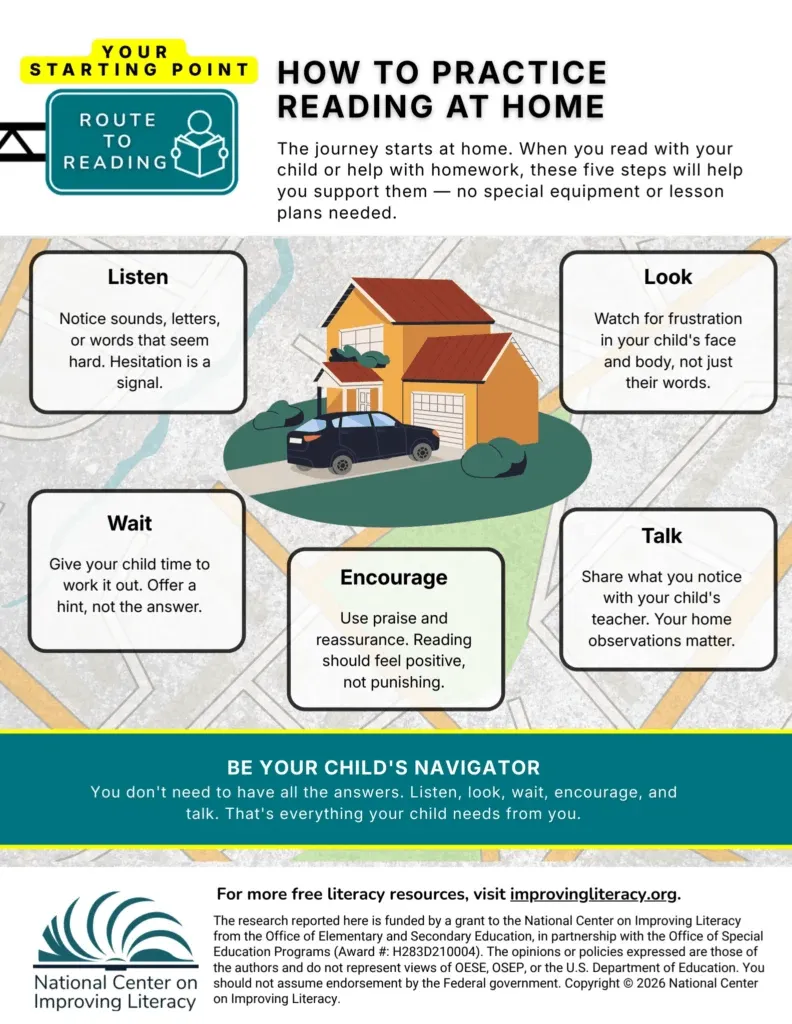
Supporting reading at home does not mean having all the answers. Instead, families can focus on being attentive, patient, and encouraging when reading with their child or helping with homework. Five simple approaches can help make these interactions more supportive: listen, look, wait, encourage, and talk.
Listening carefully can help families notice when certain speech sounds, letters, words, or ideas seem difficult. Children may hesitate, struggle to recognize a word, or have trouble expressing an idea. Paying attention to these moments can help caregivers better understand the skills their child is developing.
Looking beyond reading performance is equally important. Sometimes children communicate their difficulties through facial expressions, body language, or frustration rather than words. Recognizing these signs can help families understand when a reading activity may be challenging.
Waiting gives children an opportunity to work through a difficult task and attempt to correct themselves. Rather than immediately providing the answer, caregivers can allow time for their child to think and offer a hint when additional help is needed.
Encouragement also plays an important role. Offering praise and reassurance during reading activities can help create a positive experience, particularly when a child is struggling. Reading practice should feel supportive rather than punishing.
Finally, talking with teachers helps connect what families observe at home with the instruction children receive at school. Sharing information about skills that seem difficult, moments of frustration, and areas of progress can help educators better understand a child’s needs.
By listening, looking, waiting, encouraging, and communicating with teachers, families can play an active role in their child’s reading development while creating positive opportunities for learning at home.
Explore the Route to Reading Series
Explore all 10 infographics in the Route to Reading series, along with the complete family guide.
Explore the Complete Series