

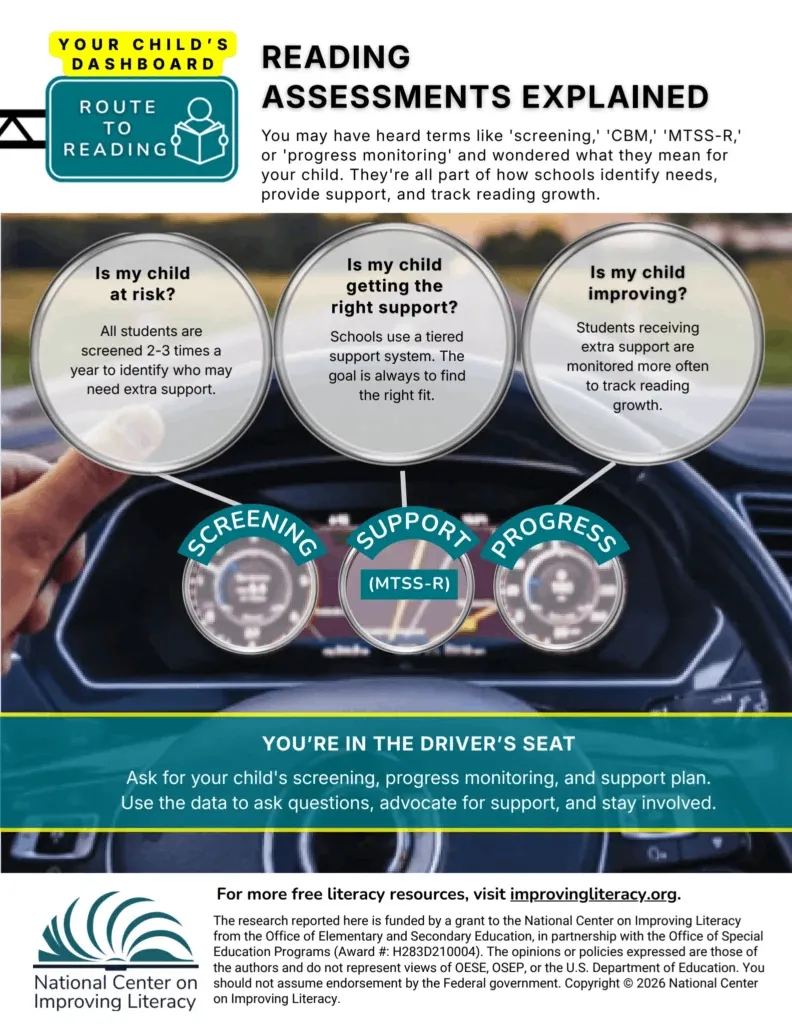
Schools use different types of reading assessments to understand how students are developing literacy skills and identify those who may need additional support. Families may hear terms such as screening, curriculum-based measurement (CBM), and progress monitoring during conversations with teachers. Understanding what these assessments measure and how schools use the results can help families better understand their child’s reading progress.
Universal screening helps schools identify students who may be at risk for reading difficulties before small struggles become bigger problems. Schools typically screen students two to three times per year, often in the fall, winter, and spring. These brief assessments provide information about important reading skills and help schools determine which students may benefit from additional instruction.
One approach schools use is curriculum-based measurement (CBM). These assessments measure specific reading skills and can also be used to monitor the progress of students receiving additional support. By checking progress regularly, educators can determine whether an intervention is working or whether adjustments may be needed.
In kindergarten through second grade, early reading assessments often focus on letter-sound knowledge, phoneme awareness, decoding, and word reading. For example, students may be asked to sound out unfamiliar or made-up words such as “lat” or “mip.” Because these words cannot be recalled from memory, students must apply their knowledge of letter-sound relationships to read them. Research shows that decoding unfamiliar words and identifying real words are strong predictors of overall reading achievement.
Screening and progress monitoring are also part of a broader schoolwide framework called the Multi-Tiered System of Support for Reading (MTSS-R). This framework helps schools provide different levels of reading support based on student needs, including strong classroom instruction for all students, additional small-group instruction, and more intensive intervention for students with significant reading difficulties.
Families play an important role in understanding and monitoring their child’s reading development. Asking which assessments are used, how often progress is measured, what the results mean, and how additional support is determined can help families stay informed and work with educators to support their child’s reading success.
Explore the Route to Reading Series
Explore all 10 infographics in the Route to Reading series, along with the complete family guide.
Explore the Complete Series