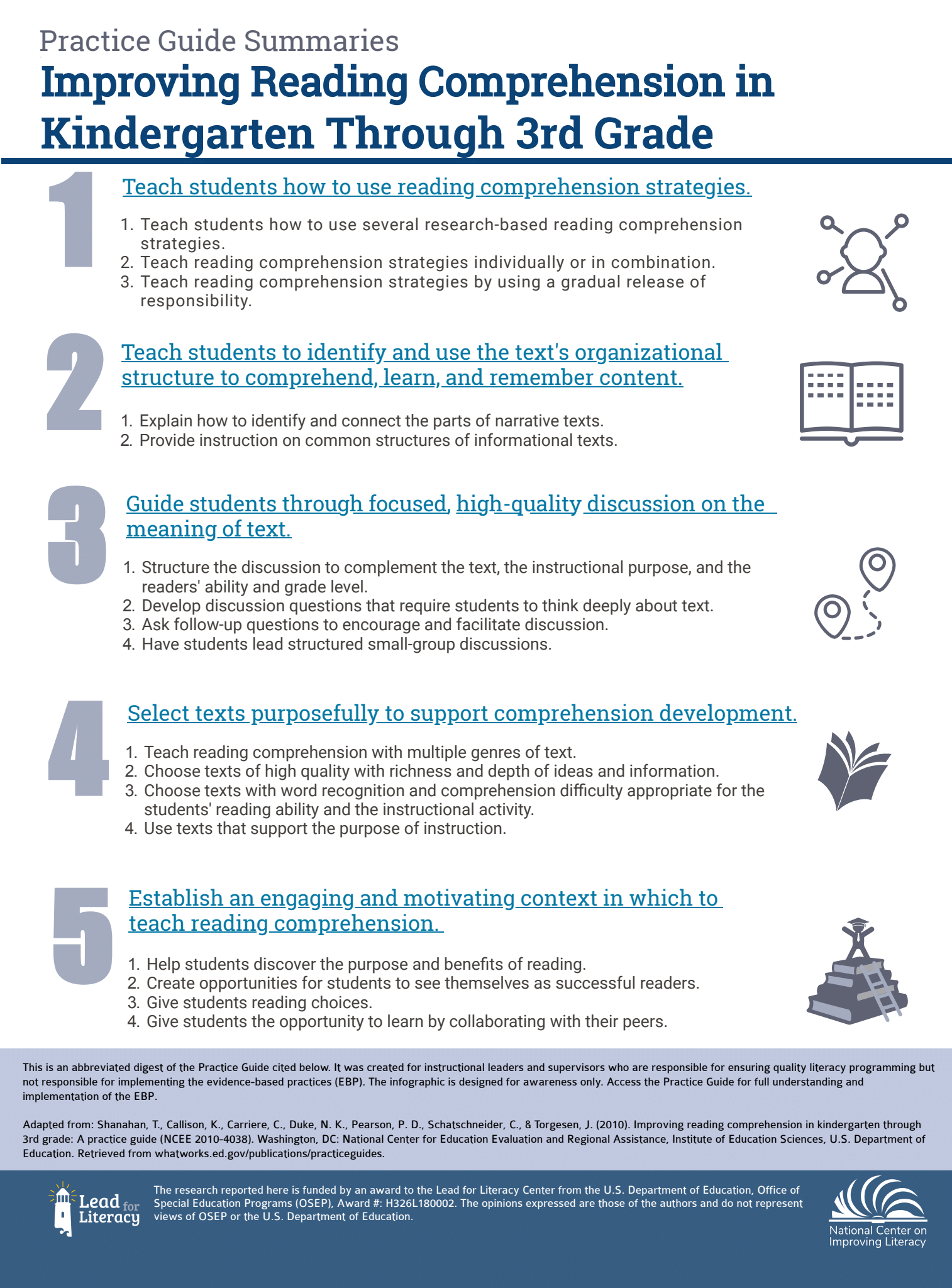
The IES practice guide on Improving Reading Comprehension in Kindergarten Through 3rd Grade provides the following five specific recommendations to successfully improve reading comprehension for young readers:
1. Teach students how to use reading comprehension strategies.
-
Teach students how to use several research-based reading comprehension strategies.
-
Teach reading comprehension strategies individually or in combination.
-
Teach reading comprehension strategies by using a gradual release of responsibility.
2. Teach students to identify and use the text’s organizational structure to comprehend, learn, and remember content.
-
Explain how to identify and connect the parts of narrative texts.
-
Provide instruction on common structures of informational texts.
3. Guide students through focused, high-quality discussion on the meaning of text.
-
Structure the discussion to complement the text, the instructional purpose, and the readers’ ability and grade level.
-
Develop discussion questions that require students to think deeply about text.
-
Ask follow-up questions to encourage and facilitate discussion.
-
Have students lead structured small-group discussions.
4. Select texts purposefully to support comprehension development.
-
Teach reading comprehension with multiple genres of text.
-
Choose texts of high quality with richness and depth of ideas and information.
-
Choose texts with word recognition and comprehension difficulty appropriate for the students’ reading ability and the instructional activity.
-
Use texts that support the purpose of instruction.
5. Establish an engaging and motivating context in which to teach reading comprehension.
-
Help students discover the purpose and benefits of reading.
-
Create opportunities for students to see themselves as successful readers.
-
Give students reading choices.
-
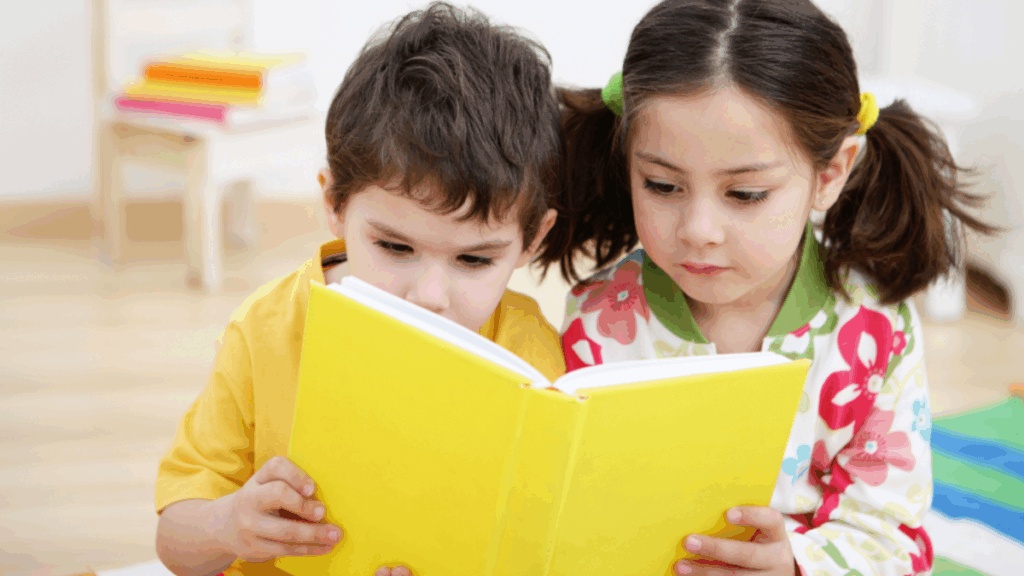
Give students the opportunity to learn by collaborating with their peers.