

When a child experiences difficulties with reading, additional instruction may be needed to help address specific skill gaps. Reading intervention provides targeted support for students who need more practice or intensive instruction. Understanding what effective intervention looks like can help families recognize the types of support their child should receive and stay informed about their progress.
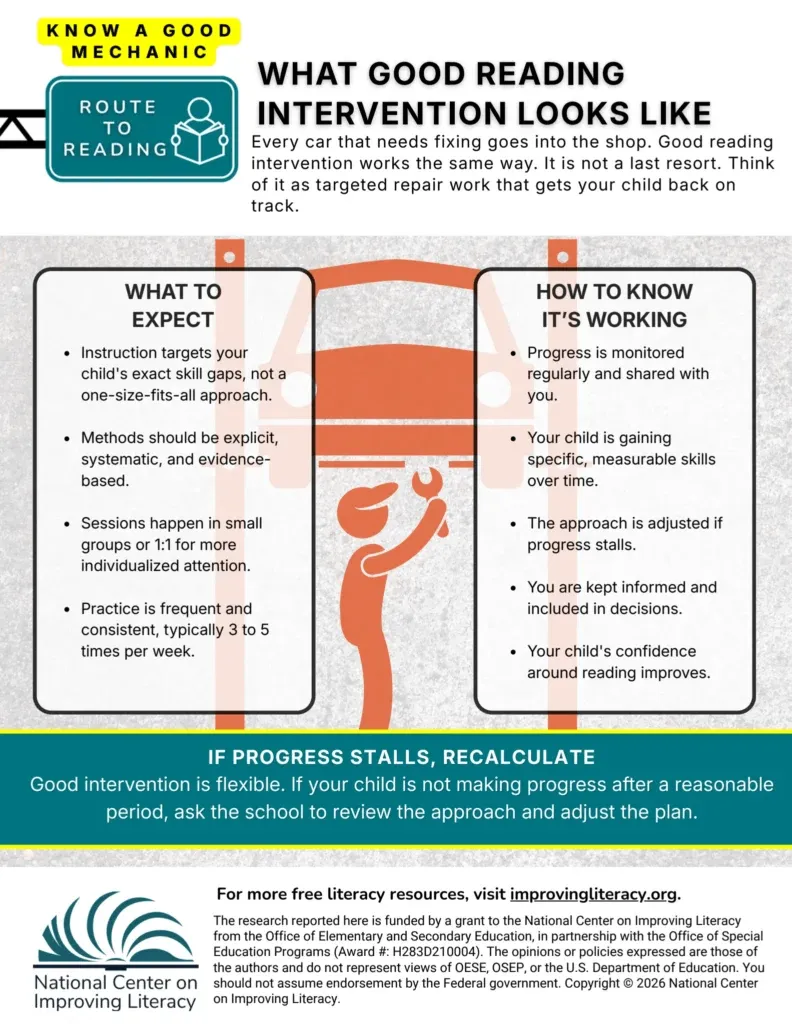
Strong reading instruction should be explicit, systematic, and evidence-based. Explicit instruction means teachers directly explain and demonstrate skills before asking students to practice them independently. Teachers model what to do, explain their thinking, and provide guided practice so students understand how to apply what they are learning.
Systematic instruction follows a carefully planned sequence, beginning with easier skills and gradually moving toward more difficult ones. Each new skill builds on what students already know, helping them develop their reading abilities over time. Evidence-based instruction uses approaches that research has shown to be reliable and effective, rather than methods chosen simply because they are engaging or popular.
These same principles should guide reading intervention. When students need additional support, instruction should address their specific reading difficulties rather than follow a one-size-fits-all approach. Intervention may take place in small groups or individually, allowing teachers to provide more focused attention and practice. Sessions should also occur frequently and consistently to support skill development.
An important part of effective intervention is monitoring progress. Schools should regularly assess whether students are developing the targeted reading skills and share that information with families. Progress monitoring helps educators determine whether the instruction is working and whether students are making measurable gains over time.
When a child is not making expected progress, the instructional approach may need to be reviewed and adjusted. Effective intervention is responsive to student needs, and families should be informed about their child’s progress and included in conversations about changes to their support.
By understanding the features of effective reading intervention, families can work with educators to ensure that their child receives instruction that addresses their needs. Regular communication, clear information about progress, and adjustments when necessary are important parts of helping children move forward in their reading development.
Explore the Route to Reading Series
Explore all 10 infographics in the Route to Reading series, along with the complete family guide.
Explore the Complete Series