
-
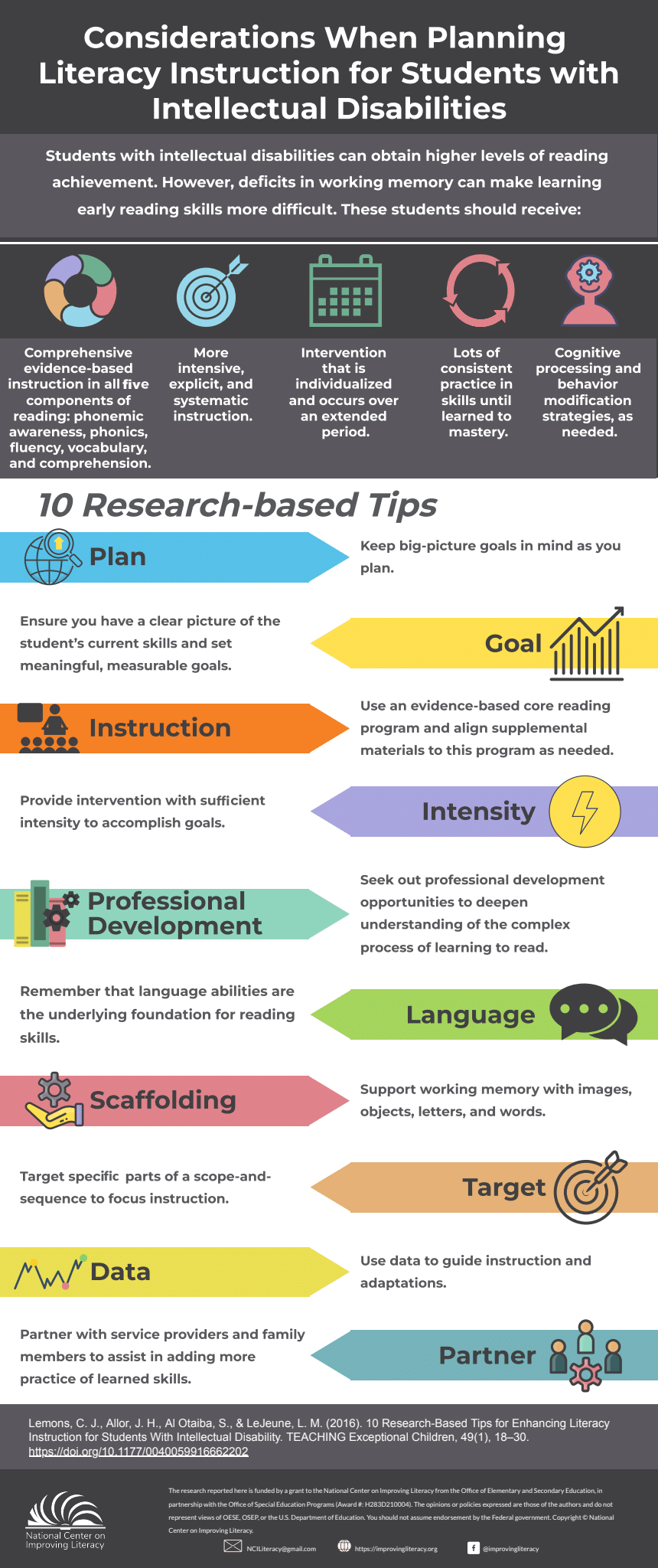
Comprehensive evidence-based instruction in all five components of reading: phonemic awareness, phonics, fluency, vocabulary, and comprehension.
-
More intensive, explicit, and systematic instruction.
-
Intervention that is individualized and occurs over an extended period.
-
Lots of consistent practice in skills until learned to mastery.
-
Cognitive processing and behavior modification strategies, as needed.
10 Research Based Tips
-
Plan
Keep big-picture goals in mind as you plan. -
Goal
Ensure you have a clear picture of the student’s current skills and set meaningful, measurable goals. -
Instruction
Use an evidence-based core reading program and align supplemental materials to this program as needed. -
Intensity
Provide intervention with sufficient intensity to accomplish goals. -
Professional Development
Seek out professional development opportunities to deepen understanding of the complex process of learning to read. -
Language
Remember that language abilities are the underlying foundation for reading skills. -
Scaffolding
Support working memory with images, objects, letters, and words. -
Target
Target specific parts of a scope-and-sequence to focus instruction. -
Data
Use data to guide instruction and adaptations. -
Partner
Partner with service providers and family members to assist in adding more practice of learned skills.